"Where Tradition Meets the Future"
Overview
Japan packs enormous variety into a country you can cross in a morning. Tokyo and Osaka run on neon, street food and late trains; two hours west, Kyoto keeps more than a thousand temples and shrines, and a geisha quarter that still works. Between them sit Mount Fuji and the Hakone hot springs, the thatched farmhouses of Shirakawa-go, the free-roaming deer of Nara and the memorial city of Hiroshima. The shinkansen ties it all together at up to 320 km/h, which is why a first trip can reasonably take in three or four regions without feeling rushed.
Ready to go packages


Where to go

Tokyo
The capital, and the arrival point for almost every itinerary. Senso-ji and the Meiji Jingu forest sit within a few stops of Shibuya's scramble crossing and the Shinjuku high-rises.

Kyoto
Japan's capital for over a thousand years, and the densest concentration of temples, shrines and preserved districts in the country. Fushimi Inari, Kiyomizu-dera, Kinkaku-ji, Arashiyama and Gion are all here.

Osaka
Japan's kitchen — Dotonbori's neon canal, the Kuromon market arcades and takoyaki counters, with Osaka Castle and Universal Studios Japan in the same city.

Hakone
Hot-spring town in the mountains south-west of Tokyo, with Lake Ashi, the ropeway over the Owakudani vents and, on a clear day, Mount Fuji.

Kanazawa
A castle town on the Sea of Japan coast that escaped wartime bombing. Kenroku-en garden, the Higashi Chaya teahouse quarter and the Nagamachi samurai lanes survive intact.

Takayama
A mountain town in the Hida region, kept as three streets of Edo-period merchant houses and sake breweries, and the base for Shirakawa-go.

Nara
Japan's first permanent capital, an hour from Kyoto. Todai-ji's Great Buddha stands in open parkland where more than a thousand wild sika deer roam.

Hiroshima
Rebuilt around the Peace Memorial Park at the hypocentre, and the gateway to Miyajima, where the Itsukushima Shrine torii stands out in the water.
Must-see experiences

Arashiyama Bamboo Grove
The bamboo path through Sagano, where stems close overhead and the light turns green.

Dotonbori
Osaka’s canal-side entertainment strip, under the Glico running man and the mechanical crab.

Fuji Five Lakes
The five lakes on Mount Fuji's northern side — Kawaguchiko, Yamanakako, Saiko, Shojiko and Motosuko — and the classic viewpoints across them.

Fushimi Inari Taisha
The head shrine of Inari, with thousands of vermilion torii gates climbing Mount Inari.

Gion
Kyoto’s best-known geisha quarter — wooden machiya along Hanami-koji and the willow-lined Shirakawa canal.

Hakone Ropeway
An aerial gondola line over the Owakudani volcanic valley, linking Sounzan to Togendai on Lake Ashi.

Hakone Sightseeing Cruise, Lake Ashi
The replica-galleon sightseeing boats crossing Lake Ashi between Togendai, Hakonemachi and Motohakone.
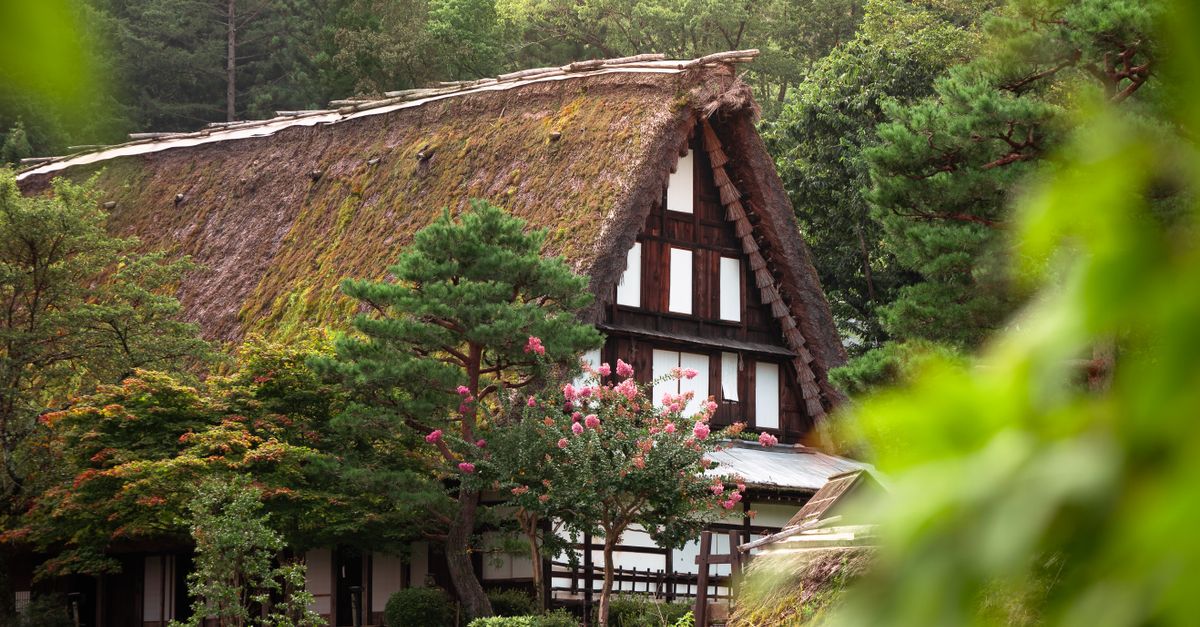
Hida Folk Village
An open-air museum of more than 30 relocated Edo-period farmhouses, including gassho-zukuri thatched roofs, set around a hillside pond.

Higashi Chaya District
Kanazawa’s largest preserved geisha quarter — two-storey wooden teahouses along lantern-lit lanes.

Hiroshima Peace Memorial Museum
The museum inside Peace Memorial Park documenting the atomic bombing through survivors’ belongings and testimony.

Hiroshima Peace Memorial Park
The open memorial park at the hypocentre, holding the Cenotaph, the Flame of Peace and the Atomic Bomb Dome.

Itsukushima Shrine
The shrine built over the tideline on Miyajima, with its great vermilion torii standing offshore.

Kenroku-en Garden
One of Japan’s three great landscape gardens, laid out beside Kanazawa Castle over almost two centuries.

Kinkaku-ji (Golden Pavilion)
The gold-leafed three-storey pavilion of Rokuon-ji, mirrored in its pond.

Kiyomizu-dera
A hillside temple whose wooden stage projects over the Higashiyama slope, reached up the Sannenzaka lanes.

Kuromon Ichiba Market
A 580m covered market arcade of roughly 150 stalls, long known as Osaka’s kitchen.

Kyoto Traditional Tea Ceremony
A guided chado tea ceremony with a host, in a traditional Kyoto tea room.

Meiji Jingu
A Shinto shrine set in a 70-hectare planted forest beside Harajuku, dedicated to Emperor Meiji and Empress Shoken.

Miyajima Ferry Crossing
The ten-minute crossing from Miyajimaguchi to Miyajima, with the floating torii approached from the water.

Nakamise-dori Shopping Street
The 250m approach lane to Senso-ji, lined with around ninety stalls selling snacks and traditional crafts.

Nara Park
Open parkland below Wakakusa hill where more than a thousand wild sika deer roam freely.

Nijo Castle
The Tokugawa shoguns’ Kyoto residence, with the nightingale floors of the Ninomaru-goten palace.

Nishiki Market
A narrow covered arcade of about 130 food stalls, known as Kyoto’s kitchen.

Nishi-Shinjuku Skyscraper District
The high-rise quarter west of Shinjuku Station, home to Tokyo’s densest cluster of skyscrapers.

Osaka Castle
A reconstructed keep above stone ramparts and moats, in a large free public park.

Osaka Guided Food Walk
A guided eating route through Dotonbori and the city’s markets, tasting Osaka’s signature dishes.

Senso-ji Temple
Tokyo's oldest temple, approached through the Kaminarimon thunder gate and the Nakamise shopping street.

Shibuya Scramble Crossing
The all-directions pedestrian crossing outside Shibuya Station, and the surrounding wall of neon screens.

Shinkansen Bullet Train Journey
Travel between Japan’s cities on the shinkansen — part of the trip rather than just transport between it.

Shinsaibashi-suji Shopping Street
A long covered arcade running north from Namba — Osaka’s principal shopping street.

Shirakawa-go
A UNESCO World Heritage mountain village of steep thatched gassho-zukuri farmhouses, still inhabited.

Shirakawa-go Viewpoint (Ogimachi Castle Ruins Observatory)
The free hillside observatory above Ogimachi, giving the classic view down over the thatched village.

Shitennoji
Japan’s oldest officially administered temple, founded in 593, with a five-storey pagoda in its walled central precinct.

Takayama Old Town (Sanmachi Suji)
Three preserved Edo-era merchant streets of dark wooden townhouses, sake breweries and craft shops.

Takeshita Street
A pedestrianised Harajuku lane of youth-fashion boutiques, crepe stands and novelty cafes.

Tenryu-ji
A UNESCO-listed Zen head temple whose 14th-century Sogenchi garden borrows the Arashiyama hills.

The Hakone Open-Air Museum
A hillside sculpture park of over a hundred outdoor works, with an indoor Picasso collection.

Todai-ji
The temple of the Great Buddha — a 15m bronze Vairocana in one of the world’s largest wooden halls.

Tokyo Guided Food Walk
A guided walking tour through Tokyo food streets and a traditional market, with tastings along the route.

Tokyo Skytree
At 634m the tallest tower in Japan, with observation levels at 350m and 450m.

Tokyo Tower
The 333m lattice tower of 1958, with a Main Deck at 150m and a guided Top Deck Tour at 250m.

Ueno Park
Tokyo's museum park — an open, free public park holding the city's densest cluster of national museums plus Ueno Zoo.

Universal Studios Japan
A major film-studio theme park in Osaka Bay, with the Wizarding World of Harry Potter and Super Nintendo World.

Yanaka Ginza
A low-rise old-Tokyo shopping lane of around sixty independent shops, reached down the Yuyake Dandan steps.
Weather & best time to visit
Seasons at a glance
Spring
March – May
Cherry blossom moves south to north — Kyushu from late March, Honshu through early April, Hokkaido not until late April or May. Tokyo's normal flowering date is 24 March with full bloom on 31 March, but the last six years have swung between 14 and 29 March, so no date can be promised. Mild, dry, and the busiest season at the headline sights.
Summer
June – August
The tsuyu rainy season runs on JMA's normals from around 7 June to 19 July in both Tokyo and the Kyoto–Osaka region. August is hot and humid — Tokyo's normal daily maximum is 31.3°C — and carries Obon and the biggest regional festivals. The Mount Fuji climbing season runs early July to about the first week of September.
Autumn
September – November
September is the sharpest end of typhoon season, and September and October are Tokyo's two wettest months — not June, as is often assumed. From late October the weather settles into the clearest, most comfortable stretch of the year, and foliage runs north to south, reaching Kyoto from mid-November and peaking late November into early December.
Winter
December – February
Snow is regional rather than national: Tokyo stays dry and mild, with a January normal of 9.8°C by day and 1.2°C at night, while the northern regions and the mountains behind them get heavy, reliable powder. The fixed points are hatsumode, the New Year shrine visit on 1 January, and the Sapporo Snow Festival in early February.
Festivals & events
A week in early February in Sapporo, with around 400 snow and ice sculptures across Odori Park and an international sculpture competition.
Kyoto, all July. Japan's best-known festival, dating to 869 — multi-ton yamaboko floats hung with antique textiles are hauled through downtown on 17 and 24 July.
Osaka, 24–25 July. A river-and-land procession honouring Sugawara no Michizane, closing with around 3,000 dedication fireworks.
Aomori, 2–7 August. Enormous illuminated lantern floats parade after dark to taiko drums, flutes and haneto dancers.
Tokushima, 12–15 August. A 400-year-old dance festival where troupes called ren dance through closed-off downtown streets before around a million spectators.
Ready to go to Japan?
From · 6–14 nights · Fully curated by a real expert