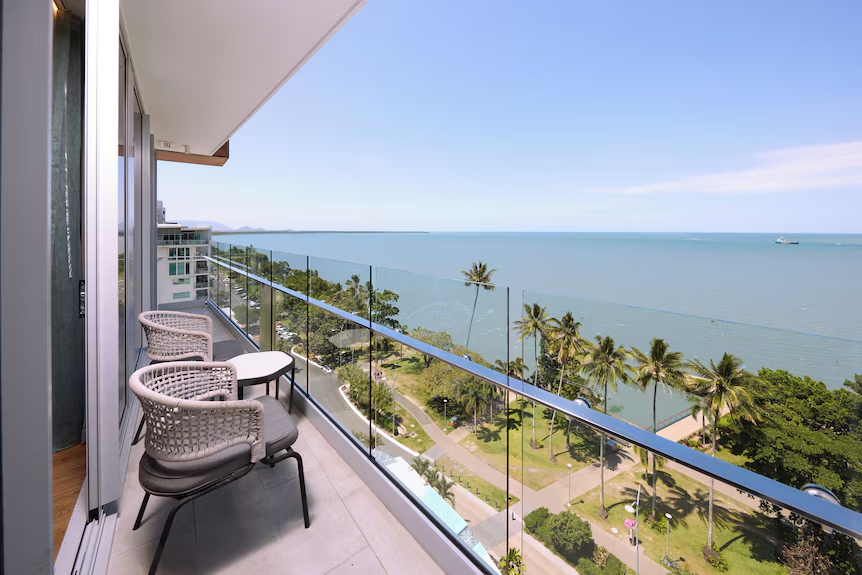
The gateway to the Great Barrier Reef
The gateway to the Great Barrier Reef and the Daintree. Reef boats leave from the marina, the Esplanade Lagoon fronts the waterfront, and Kuranda sits above the city, reached by scenic railway and cableway. It is tropical all year, with the best weather in the dry season.
Getting around. The city centre and Esplanade are walkable. Kuranda, the Daintree and the reef boats are reached by tour, scenic railway or hire car.

Things to do in Cairns
4 experiences from our activity catalogue


Packages that include Cairns
Ready-to-book itineraries with Cairns on the route


Hand-picked hotels
Stays our experts book in Cairns
Weather and best time to visit
Tap a month to see the details
Best time to visit
June
The dry season begins, with clear skies and calm seas.
Hot and often humid down the east coast; Sydney averages a 26°C daily maximum in January. It is peak domestic holiday season, so coastal New South Wales and the Gold Coast are at their busiest and most expensive. In the tropical north it is the wet season, when Cairns sees monsoon rain, marine stinger nets go up on the beaches and reef visibility can drop.
Warm days, cooler nights and thinning crowds in the south. Melbourne and the Great Ocean Road are at their most comfortable, and the tropical wet eases from around April, which makes late autumn a strong window for pairing the reef with the southern cities.
Sydney's coolest month is July, averaging a 16.4°C daily maximum, and the coast rarely sees frost. This is the dry season in Queensland and the Northern Territory — the most reliable window for the Great Barrier Reef and for Uluru, where days are mild but desert nights fall close to freezing.
Mild and settled in the south, with humpback whales migrating along the east coast and comfortable walking weather at Uluru before the summer heat arrives. Reef conditions in the north are still good and school-holiday crowds have not yet peaked.
More cities in Australia
Often paired with Cairns on the same trip